
Eddie’s Fight for Musical Agency
Daisy Jones & the SixEddie Loving’s resentment grows as Billy Dunne controls the music, leaving Eddie to choose between continued success and the dignity of an equal voice.
increasing Bearing strength in each event
 decreasing
Bearing strength in each eventdecreasingAn Outsider in the Lineup
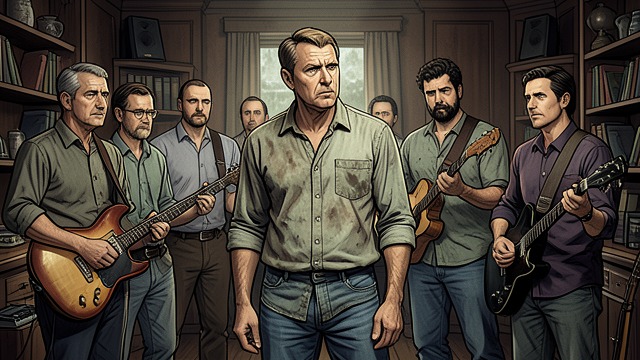
An Outsider in the Lineup
A temporary replacement
Eddie Loving joins The Six after Chuck Williams is drafted. He gets along with the group but senses that Billy Dunne and Graham Dunne expect him to fit a preexisting mold.
A pattern begins
The band needs Eddie’s guitar, yet Billy still determines much of what he plays. Eddie’s early discomfort becomes the foundation for a longer dispute about authorship and respect.
The First Album’s Dictation
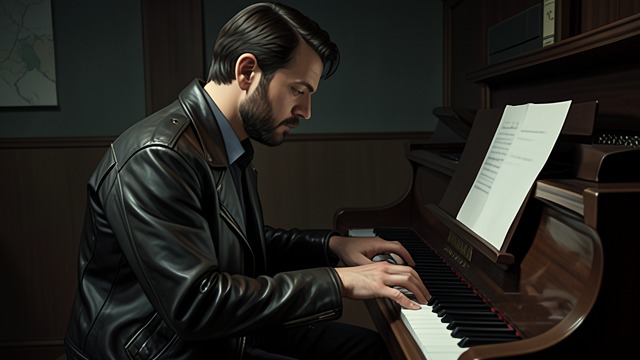
The First Album’s Dictation
Parts assigned from above
Billy Dunne writes most songs and often arrives knowing what he wants each musician to play. Eddie Loving sees others accept the arrangement without challenging it.
Silence carries a cost
Eddie pushes back occasionally, but Teddy Price backs Billy’s judgment. The band’s early success normalizes a creative structure that leaves Eddie feeling he has little control over his own instrument.
A Public Displacement

A Public Displacement
A song becomes a contest
When Daisy Jones’s band disappears, Billy Dunne takes Eddie Loving’s guitar and performs Honeycomb with Daisy. The improvised choice produces a strong show, but Eddie feels pushed aside in front of the audience.
Praise deepens the wound
Billy thanks Eddie afterward for helping the show, but explains that he took over because Rolling Stone was watching. Eddie hears this as proof that his contribution matters only when Billy permits it.
The Rerecorded Parts
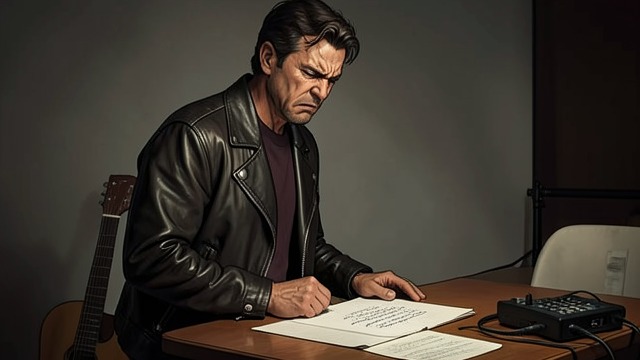
The Rerecorded Parts
The changes are revealed
Eddie Loving hears that Billy Dunne and Teddy Price have changed guitar parts on Aurora without discussing them with the band. Other members notice that their work has also been altered.
Success silences protest
Runner Records celebrates the finished album, and the prospect of commercial success makes dissent difficult. Eddie is angry not only at the edits but at the way decisions are concealed.
A Career on His Own Terms

A Career on His Own Terms
Resentment reaches its limit
By the final tour, Eddie Loving sees Billy’s authority as incompatible with the band’s promises of equality. Pete Loving’s planned departure and Billy’s unilateral decisions intensify the sense that Eddie is treated as subordinate.
A different kind of success
After the breakup, Eddie becomes a record producer and runs a studio. He describes the outcome as ending up on top, reclaiming agency outside Billy’s band.
1970, after Chuck Williams is drafted
early 1970s, while recording the debut album
1976, after the Glasgow performance
early 1978, at the final Aurora playback
July 1979 and the years after the split
